Introduction
The stereotype of the lazy stoner is dead. Not dying — dead. More athletes, gym-goers, and genuinely active people are using cannabis as part of their training and recovery than at any point in history. And we're not talking about weekend warriors sneaking a gummy after leg day. We're talking about professional fighters, Olympic-level track athletes, and endurance competitors who treat cannabis products with the same seriousness as their protein intake.
The UFC removed cannabis from its banned substance list. WADA raised its THC threshold by 10x. Professional athletes from Nate Diaz to Kevin Durant to Sha'Carri Richardson have been open about their use. The conversation has shifted — hard — from "does cannabis make you lazy?" to "which cannabis products work best for recovery?"
This article covers what actually matters: the science behind cannabis and fitness, practical product recommendations, what the rules say across major sports leagues, and how to integrate cannabis into an active lifestyle without it slowing you down. Whether you're a competitive athlete or someone who just takes their training seriously, this is the information you need.
The Science: Cannabinoids and Recovery
Inflammation
THC and CBD both interact with the body's endocannabinoid system, which plays a direct role in regulating inflammation. After intense exercise — heavy squats, long runs, hard sparring sessions — your body triggers an inflammatory response. That's normal. Controlled inflammation is actually part of how muscles repair and grow back stronger. But excessive inflammation? That delays healing, causes unnecessary pain, and can sideline you from training.
CBD has demonstrated anti-inflammatory properties across multiple studies. It interacts primarily with CB2 receptors found throughout the immune system, helping modulate the inflammatory response without shutting it down completely. That's the key distinction — you don't want zero inflammation after training. You want the right amount.
THC also has anti-inflammatory effects, though its psychoactive properties mean athletes need to think carefully about timing. You're not going to hit a dab pen before deadlifts. But a low-dose THC product in the evening, after training is done? That's where it fits into a recovery protocol.
Pain Management
For decades, the standard post-workout pain management toolkit was ibuprofen and ice. Pop a few Advil, tough it out. But long-term NSAID use comes with real downsides — gastrointestinal problems, kidney stress, and potential cardiovascular risks. Athletes who train five or six days a week can't just hammer NSAIDs indefinitely.
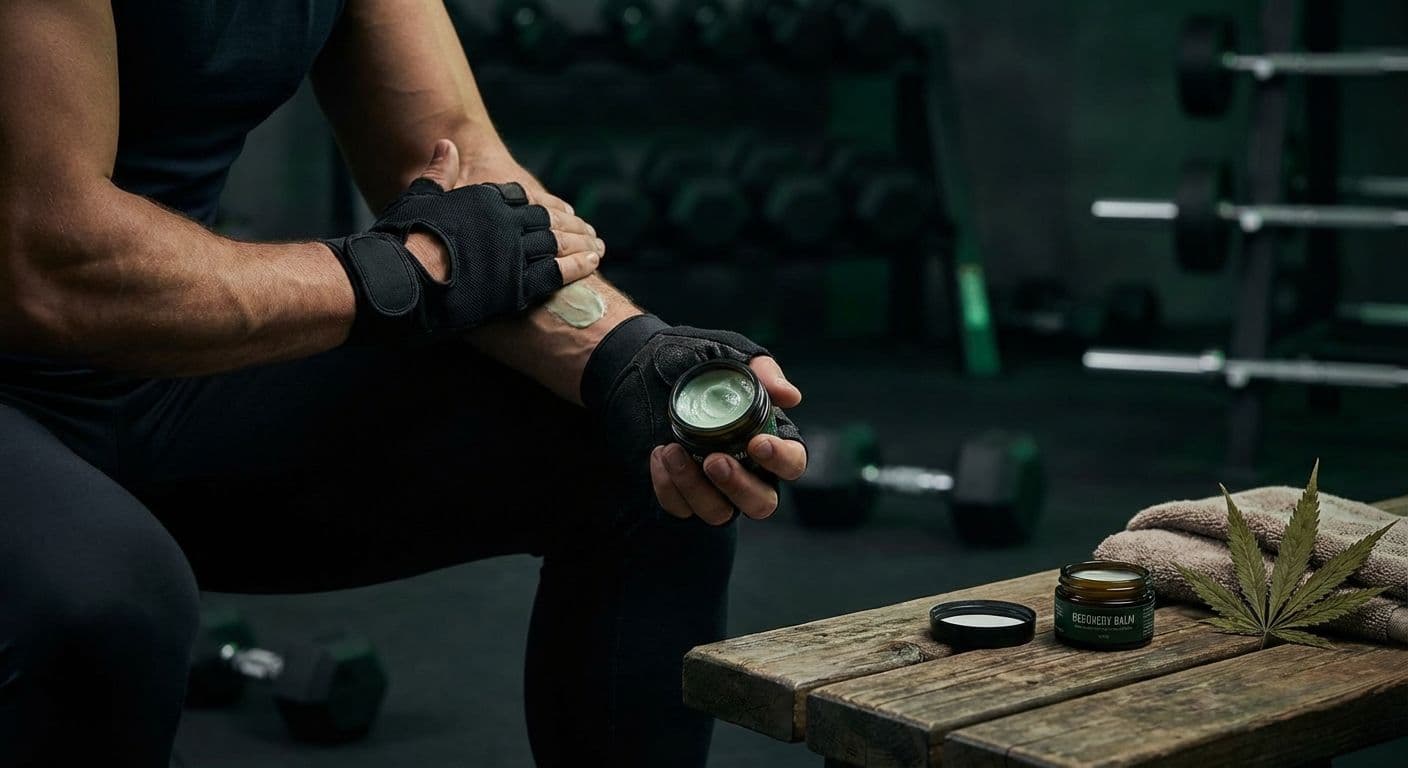
Cannabis-based alternatives are filling that gap. Topical products — creams, balms, salves — deliver anti-inflammatory compounds directly to muscles and joints without any psychoactive effect. You rub it on your knee after a run, it works locally. No high, no systemic effects, no stomach issues.
One important distinction: there's a difference between managing pain during recovery and masking an injury you should be resting. Cannabis for recovery is about reducing inflammation and discomfort so your body can heal. Using it to push through an injury that needs medical attention is a different conversation entirely. Know the difference.
Sleep
This is the one that doesn't get enough attention. Recovery doesn't happen in the gym. It happens during sleep — specifically during deep sleep (slow-wave sleep), when muscle protein synthesis peaks, growth hormone releases, and tissue repair kicks into high gear.
Cannabis, particularly products containing CBN and strains high in the terpene myrcene, can improve sleep onset and total sleep duration. Some research suggests THC may reduce REM sleep, but the impact on deep sleep — the phase that matters most for physical recovery — varies by individual and dose.
The protocol many athletes follow: 2.5 to 5mg of THC about an hour before bed. Low enough to avoid grogginess the next morning. High enough to quiet the mind and fall asleep faster. It's not about getting stoned before bed. It's about using a specific dose as a sleep tool.
What Athletes Are Actually Using
CBD Products
CBD tinctures and capsules are the baseline for a lot of athletes. Many take 25 to 50mg of CBD daily as ongoing anti-inflammatory support — same way you'd take a fish oil supplement. It's not a dramatic intervention. It's a consistent, low-level defense against the chronic inflammation that comes with heavy training.
CBD topicals are the other big category. Applied directly to sore muscles and stiff joints after training. Shoulders after overhead pressing. Knees after running. Lower back after deadlifts. Targeted relief, no systemic effects.
CBD is non-psychoactive, federally legal under the 2018 Farm Bill, and won't cause a failed drug test at typical doses. One caveat: full-spectrum CBD products contain trace amounts of THC. If you're subject to drug testing, isolate or broad-spectrum products are the safer call.
THC Products for Recovery
Low-dose THC edibles — 2.5 to 5mg — are the go-to for post-workout recovery. Not during training. After. The goal isn't to get high. It's to relax, reduce inflammation, and set up better sleep. Think of it as the recovery version of a post-training protein shake, just with a different mechanism.
THC:CBD balanced products — 1:1 or 2:1 ratios — combine anti-inflammatory and pain-relieving effects. The CBD moderates the psychoactive impact of the THC, so you get the therapeutic benefits without being couch-locked. These ratios are popular among athletes who want the entourage effect without the full THC experience.
THC topicals deserve their own mention. Cannabinoids applied to the skin don't reach the bloodstream in significant amounts, which means you get localized relief without psychoactive effects. A THC-infused muscle balm won't get you high, but it can reduce inflammation in the specific area you apply it to.
Product Categories for Athletes
Here's how different product types map to an athlete's day:
- Pre-roll or vape for immediate post-training relaxation — onset in minutes, short duration
- Edibles or tinctures for evening recovery — longer duration, predictable timing
- Topicals for targeted muscle and joint treatment — no psychoactive effects at all
- Bath bombs and soaks — THC/CBD infused bath products for full-body recovery after especially hard sessions. Growing category, and for good reason.
The Rules: WADA, UFC, and Professional Sports
WADA (World Anti-Doping Agency)
Cannabis is still on WADA's prohibited list — but only in-competition. Out-of-competition use is not tested for. In 2013, WADA raised the urinary threshold from 15 ng/mL to 150 ng/mL, a 10x increase. What that means practically: casual cannabis use a few days before competition won't trigger a positive test. They're not trying to catch someone who smoked a joint on Tuesday and competed on Saturday.
CBD is not prohibited by WADA. Period. Athletes in WADA-governed sports can use CBD products freely, year-round, in and out of competition. The only risk is full-spectrum products that contain trace THC — during competition periods, athletes should stick to CBD isolate or broad-spectrum products to avoid any chance of crossing the threshold.
UFC
In 2021, the UFC removed cannabis from its anti-doping policy entirely. Fighters are no longer tested for THC. No penalties, no suspensions, no issues. This was a massive shift for combat sports.
Nate Diaz famously vaped CBD at a post-fight press conference back in 2016, years before the policy changed. The Diaz brothers, Eddie Bravo in jiu-jitsu, and dozens of MMA athletes have been vocal about using cannabis for recovery, pain management, and mental health. The UFC's policy change was a recognition of what was already happening across the sport.
NFL, NBA, MLB
The NFL stopped suspending players for positive cannabis tests in 2020. Testing still occurs, but penalties are treatment-oriented, not punitive. The NBA suspended cannabis testing during the 2020 bubble season and hasn't fully reinstated it. MLB removed cannabis from its banned substances list in 2019.
The pattern is unmistakable. Every major professional sports league in North America has either eliminated or significantly softened its stance on cannabis. The era of athletes losing game checks and getting suspended over a plant is ending.
College and Amateur Athletics
The NCAA still tests for THC. If you're a student-athlete, know your conference and school's specific policies. State high school athletic associations vary widely. The professional leagues are ahead of amateur athletics on this issue, which isn't surprising — but it means younger athletes need to be more careful.
Timing and Dosing for Active People
When to Use Cannabis Around Training
Not before training. Let's get that out of the way first. THC impairs coordination, reaction time, and spatial awareness. Training under the influence is a safety issue, especially with heavy weights, technical lifts, or anything involving speed and balance. Don't be that person.
Some people report that cannabis helps with long, low-intensity cardio — running, cycling, hiking. There's an argument that THC can reduce perceived exertion during steady-state work. But this is highly individual, and if you haven't tried it before, a long solo run isn't the time to experiment. Save it for the treadmill at home, not the trail.
Post-training in the evening is the sweet spot for most athletes. A low-dose edible or a few hits from a vape after the workout is done. It helps with relaxation, appetite — which matters if you're in a caloric surplus — and sleep. All three of those feed directly into recovery.
Rest days are the other window. If you want to use cannabis recreationally or at higher doses, rest days make the most sense. No performance impact, no safety concerns during training, and you still get the anti-inflammatory benefits.
Dosing for Athletes
Start lower than you think you need. Athletic bodies metabolize compounds differently than sedentary ones. Lean body mass, metabolic rate, hydration levels, and training status all affect how your body processes cannabis. A 5mg edible hits different when you're 185 pounds at 12% body fat versus 185 pounds at 30%.
For CBD: 25 to 50mg daily is a solid starting point for anti-inflammatory support. Some athletes go higher — 100mg or more — but start conservative and assess.
For THC: 2.5 to 5mg for recovery purposes. The goal isn't to get blasted. It's just enough for relaxation and sleep support. If you need 20mg to feel anything, you're either using it too frequently or your product isn't what it claims.
Track your doses and your training performance. Keep a simple log if you're serious about optimizing. Note the product, the dose, the timing, and how your next training session felt. If cannabis is interfering with your training — grogginess, reduced intensity, skipping sessions — adjust the timing, the dose, or the product. The goal is always better performance, not worse.
Cannabis vs. Traditional Recovery Methods
This isn't either/or. Cannabis works best as a complement to the recovery strategies you're already using, not a replacement for them.
Cannabis and ice baths target inflammation through different mechanisms. Ice is local and acute — constricting blood vessels, reducing swelling at the site. Cannabis is systemic — modulating the inflammatory response through the endocannabinoid system. They work on different timescales and through different pathways. Using both isn't redundant.
Cannabis and massage pair well. THC topicals applied before a sports massage can enhance muscle relaxation and make the bodywork more effective. Foam rolling with a CBD balm on the target area is a low-tech version of the same idea.
For sleep, low-dose THC or CBN can be part of a broader protocol — cool room, dark room, consistent schedule, no screens before bed. Cannabis doesn't replace sleep hygiene. It's one tool in the system.
Cannabis versus alcohol for recovery — this one's not close. Alcohol impairs muscle protein synthesis, disrupts sleep architecture, and dehydrates you. Cannabis doesn't do any of those things. The cultural shift from post-game beers to post-game cannabis is real in professional sports, and the science backs it up. If you're choosing between a few beers and a low-dose edible after a hard training day, the edible is the better recovery choice every time.
Cannabis versus prescription pain medication — for chronic pain management, cannabis presents significantly fewer addiction risks than opioids. Multiple professional athletes have spoken publicly about choosing cannabis over painkillers, especially after surgery or during long seasons. This isn't fringe anymore. It's a legitimate conversation in sports medicine.
DGT for the Active Lifestyle
Dr. Greenthumb's product range includes options built specifically for the active consumer. CBD-forward products for daily anti-inflammatory support. Low-dose edibles calibrated for evening recovery. Topicals formulated for post-training application. Every product is lab-tested and consistent — when you buy a 5mg edible, it's 5mg. When you buy a 500mg CBD tincture, the certificate of analysis backs it up.
That consistency matters for athletes. You can't dose accurately with inconsistent products. You can't build a recovery protocol around something that varies from batch to batch. DGT's commitment to clean ingredients and transparent lab testing means you know exactly what you're putting in your body — same standard you'd apply to your food and supplements.
Whether you're a weekend warrior, a competitive amateur, or a professional athlete, the product lineup is designed for recovery, not couch-lock. Train hard. Recover smarter.

