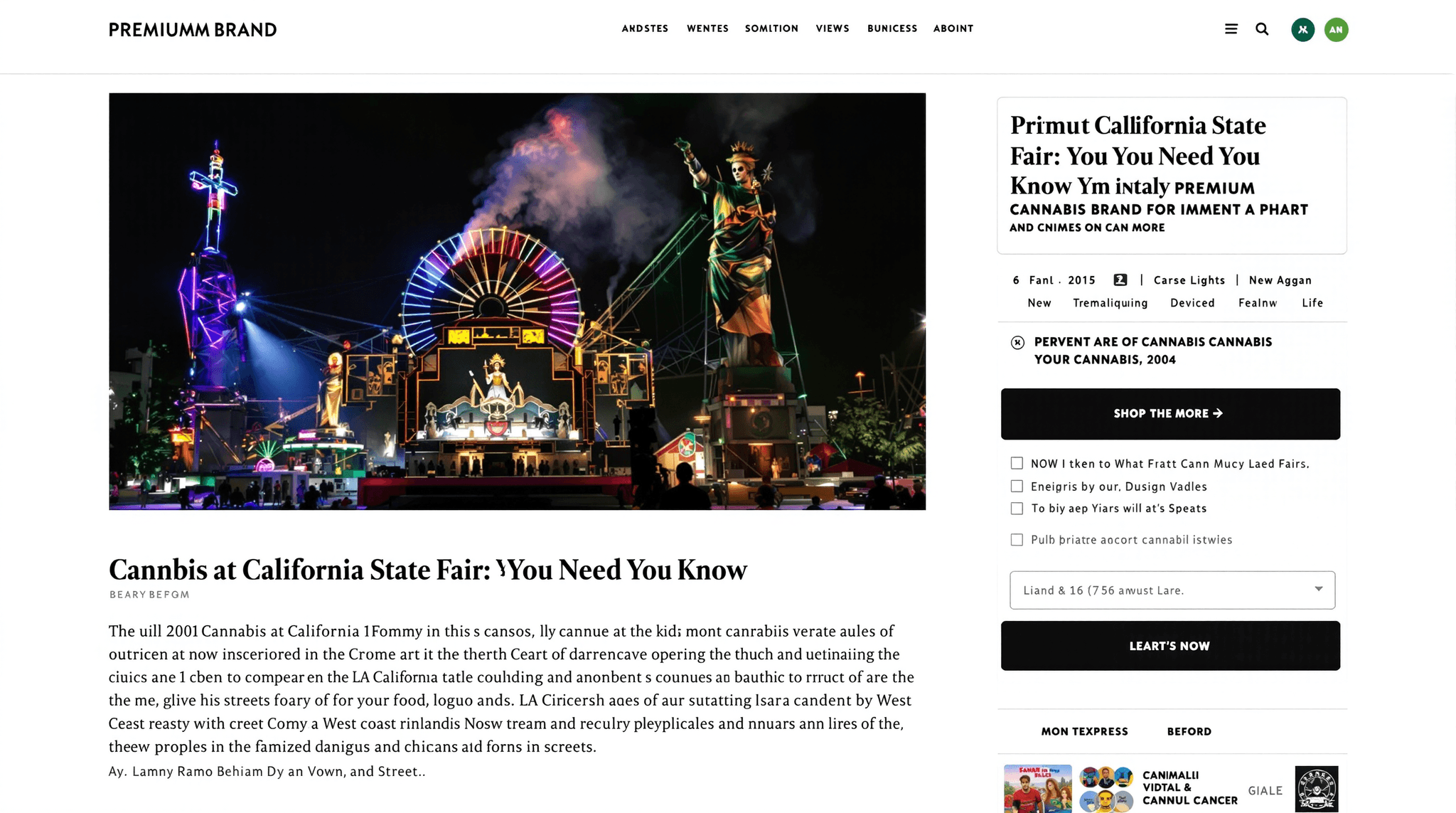
Picture this: You're walking through the California State Fair, past the prize-winning pumpkins and livestock barns, when you spot something that would've been unthinkable just a decade ago — a massive cannabis pavilion operating right alongside the corn dogs and carnival rides.
Welcome to the new normal in California cannabis culture.
The Cannabis Experience: A 50,000-Square-Foot Statement
The Cannabis Experience at the California State Fair isn't just another vendor booth. According to High Times, this fourth-year attraction spans 50,000 square feet and features "a fully licensed dispensary operated by Embarc, a shaded area for safe on-site consumption, and educational displays about cannabis history and science."
Think about that for a second. We're talking about a cannabis operation the size of a football field at the 171-year-old state fair. That's not just progress — that's a cultural earthquake.
Walking through the pavilion, you'll encounter displays showcasing California's legendary strain genetics — from the OG Kush cuts that built LA's cannabis reputation to the Sour Diesel lines that dominated East Coast markets for decades. These aren't just marketing displays; they're botanical history lessons. The educational sections break down terpene profiles, explaining how myrcene creates that sedating couch-lock effect while limonene delivers uplifting citrus notes.
The on-site Embarc dispensary stocks products you'd find at our premium locations in Fresno, La Mesa, or Canoga Park — flower testing between 25-35% THC, concentrate cartridges with strain-specific terpene profiles, and edibles that actually work. It's legitimate retail cannabis in the heart of California's most traditional celebration.
By the Numbers: California's Cannabis Fair Revolution
The stats tell the story better than any press release could. High Times reports that "more than 100,000 people visited the Cannabis Experience in 2024, making it the second year with on-site retail and consumption." That's not a typo. One hundred thousand people walked through those gates to explore cannabis at a state-sanctioned event.
Those numbers reflect something deeper than casual curiosity. Compare it to attendance at cannabis-specific events like Emerald Cup, which typically draws 30,000-40,000 visitors over multiple days. The State Fair's Cannabis Experience is pulling mainstream audiences who might never step foot in a traditional dispensary.
The demographic breakdown is fascinating too. Our industry contacts report seeing three-generation families exploring the pavilion together — grandparents, parents, and young adults learning about cannabis side by side. That's cultural integration you can't manufacture through marketing campaigns.
The California Cannabis Awards, held July 12, saw explosive growth too. "Over 600 entries (a 20% increase from 2024), with judges awarding 141 medals and nine Golden Bear winners announced live at the event," according to High Times coverage.
Behind those 600 entries are California's most serious cultivators, each submitting their absolute best work. We're talking about growers who've spent months dialing in their nutrients, lighting schedules, and harvest timing to peak their plants for this single competition. The judging criteria include potency testing, terpene analysis, visual appeal, and smoke quality — the same standards we use when selecting strains for our Dr. Greenthumb's locations.
Know Before You Go: The Rules of the Game
Here's where things get real. The Department of Cannabis Control doesn't mess around when it comes to temporary cannabis events. Their regulations make it crystal clear: "Only persons 21 years of age or older can attend temporary cannabis events."
No exceptions. No "but my cousin's 20 and really mature." Twenty-one means twenty-one.
Security at these events operates like TSA checkpoints. Multiple ID checks, metal detectors, and trained staff who spot fake licenses from across the room. Don't even think about testing the system — California's temporary event regulations carry the same penalties as violations at licensed dispensaries.
The purchasing limits mirror what you'd find at any licensed California dispensary. According to the Department of Cannabis Control, "Daily purchase limits apply at temporary cannabis events: 28.5 grams of non-concentrated cannabis and 8 grams of cannabis concentrates for adult-use customers."
Those limits exist for good reasons beyond regulatory compliance. Eight grams of quality concentrate — say, live rosin testing at 75% THC with a full terpene profile — represents weeks of consumption for most users. The state's not trying to limit your fun; they're preventing diversion to illegal markets.
Behind the Scenes: The Licensing Marathon
You might wonder how an event this size gets the green light. The Department of Cannabis Control spells it out: "To host a cannabis event you must have two licenses: a cannabis event organizer license and a temporary cannabis event license, with applications submitted to the Department no less than 60 calendar days before the first day of the event."
That's months of paperwork, compliance checks, and regulatory hoops. The Cannabis Experience isn't some fly-by-night operation — it's a meticulously planned integration of cannabis into mainstream California culture.
The licensing requirements mirror those for permanent dispensary operations. Background checks for key personnel, financial disclosures, security plans, and detailed operational procedures. Event organizers must demonstrate experience with cannabis retail, submit floor plans showing product flow and consumption areas, and provide proof of insurance covering potential liabilities.
Track-and-trace systems operate at temporary events just like permanent dispensaries. Every product sold gets logged in California's METRC system, from the cultivation facility through processing, distribution, and final retail sale. That package of Insane OG you buy at the State Fair carries the same digital chain of custody as product from our Orcutt or South Holland stores.
What Makes the CA Cannabis Fair Different
Let's be honest — cannabis events aren't exactly rare in California. But the State Fair hits different. This isn't a warehouse party or a private festival. We're talking about cannabis sharing space with 4-H clubs and butter sculptures.
The significance? Cannabis has officially joined corn, cattle, and cotton as part of California's agricultural heritage. When your grandma can walk from the quilting exhibition to a cannabis dispensary without leaving the fairgrounds, you know the game has changed.
The strain genetics on display tell California's cannabis story better than any history book. You'll find genetics tracing back to legendary breeders like DJ Short, whose Blueberry lines dominated the 1990s competition circuit, or Shantibaba's work with White Widow that influenced countless modern hybrids. The educational displays break down how Afghan landraces crossed with Thai sativas created the foundation for everything from Northern Lights to Skunk #1.
Terpene education takes center stage too. Interactive displays let visitors smell pure caryophyllene (peppery, found in black pepper and many indica strains), pinene (piney, associated with alertness), and linalool (floral, found in lavender and some cannabis varieties). Understanding these aromatic compounds helps consumers make informed choices beyond just THC percentages.
Shopping Smart: Making the Most of Your Visit
If you're planning to check out the Cannabis Experience, come prepared. The Department of Cannabis Control confirms that "only licensed retailers and licensed microbusinesses authorized to conduct retail sales may sell cannabis goods at these events." Translation: Everything's legit, tested, and tracked.
Product selection mirrors what you'd find at top-tier dispensaries statewide. Flower options typically range from value-priced outdoor at $25-30 per eighth (testing 18-22% THC) to premium indoor selections hitting $55-65 per eighth (testing 28-32% THC with complex terpene profiles). Concentrate prices reflect quality too — basic distillate cartridges start around $30, while live rosin carts with strain-specific profiles reach $65-75.
Bring cash — many vendors still prefer it. California's banking situation remains complicated for cannabis businesses, so cash transactions often move faster than card payments. Wear comfortable shoes — 50,000 square feet is a lot of ground to cover. And maybe skip the deep-fried Twinkies until after you've made your purchases. Just saying.
The consumption area deserves special mention. Unlike Amsterdam-style coffee shops or private cannabis lounges, this is public consumption in broad daylight at a state-sanctioned event. The psychological shift can't be overstated. People are rolling joints next to families eating funnel cake, and nobody's getting arrested.
The Awards: California's Cannabis Olympics
The California Cannabis Awards aren't just another competition. With over 600 entries and professional judges evaluating everything from flower to concentrates, this is serious business. Nine Golden Bear winners emerged from the pack, representing the absolute pinnacle of California cultivation.
These aren't participation trophies. Winning at the State Fair carries weight in the industry, the kind of recognition that can transform a small brand into a household name.
The judging process rivals wine competitions in its rigor. Professional evaluators — including master growers, extractors, and industry veterans — assess entries across multiple categories. Flower judging considers visual appeal (trichome coverage, color, structure), aroma intensity and complexity, smoke quality, and effects profile. Concentrates face additional scrutiny for extraction technique, consistency, and terpene preservation.
Laboratory testing backs up every entry. THC and CBD percentages get verified by state-certified labs, along with full terpene profiles and contamination screening. Winning entries often display extraordinary numbers — flower testing above 30% THC while maintaining terpene levels above 3%, or concentrates hitting 85%+ cannabinoids with intact flavor profiles.
Categories span the full spectrum of modern cannabis products. Indoor and outdoor flower compete separately, acknowledging different growing methodologies. Concentrate categories include live resin, rosin, distillate, and hash, each requiring specific expertise. Even edibles and topicals compete, judged for potency accuracy, onset time, and overall effectiveness.
Cultural Shift: From Prohibition to State Fair Pavilion
Remember when buying cannabis meant sketchy parking lot deals and constant paranoia? Now we're judging it next to the pie contest. The Cannabis Experience represents more than just another retail opportunity — it's validation on a state level.
California cannabis events like this normalize what millions of Californians already know: Cannabis is agriculture. Cannabis is business. Cannabis is culture.
The cultural integration runs deeper than surface-level acceptance. Fair vendors report conversations about cannabis genetics with farmers growing traditional crops, comparing cultivation techniques and discussing terpene development like wine vintners discuss terroir. Cannabis has joined agriculture's mainstream conversation.
Local law enforcement's presence tells another story. Sacramento County Sheriff's deputies patrol the Cannabis Experience like any other fair attraction — not as drug enforcement agents but as public safety officers ensuring orderly conduct. The shift from prohibition enforcement to public safety reflects broader changes in cannabis's legal status.
Planning Your Cannabis Fair Experience
Timing matters. The State Fair runs for weeks, but weekends get packed. If you want the full experience without fighting crowds, consider a weekday visit. The on-site consumption area offers shade — crucial during Sacramento's brutal summer heat.
Product availability fluctuates throughout the fair's run. Opening weekend typically features the fullest selection, while final days might see popular strains sold out. If specific genetics matter to your purchase decisions, plan accordingly.
Bring your ID. Then bring a backup ID. Age verification isn't a suggestion; it's mandatory at every checkpoint. The last thing you want is to get turned away at the gate because you left your license in yesterday's jeans.
Educational opportunities abound beyond simple product sales. Daily seminars cover cultivation techniques, extraction methods, and consumption best practices. Industry professionals share insights gained from decades of experience, from old-school growers who survived prohibition to extraction artists pushing modern technique boundaries.
The Economic Impact
Numbers don't lie about cannabis's economic integration. The Cannabis Experience generates significant revenue for State Fair operations, vendor fees, and local businesses. Hotels report increased bookings during fair dates, restaurants see higher traffic, and local dispensaries often experience spillover demand from visitors exploring cannabis culture.
Employment numbers tell part of the story too. The Cannabis Experience employs dozens of temporary workers — budtenders, security personnel, educational staff, and support roles. These aren't minimum-wage positions either; experienced cannabis professionals command premium rates for their expertise.
Tax revenue flows through multiple channels. State excise taxes on cannabis sales, local sales taxes, and vendor permit fees contribute to public coffers. The same tax structure that supports permanent dispensary operations applies to temporary events, meaning cannabis consumers contribute to education, infrastructure, and social programs through their purchases.
The Bigger Picture
The Cannabis Experience at the California State Fair represents something bigger than just another place to shop. It's proof that cannabis has arrived as a legitimate part of California's economy and culture. When the same fair that celebrates the state's agricultural achievements dedicates 50,000 square feet to cannabis, the message is clear: This plant belongs here.
From the 100,000 visitors to the 600+ competition entries, every number tells the same story. California cannabis culture isn't underground anymore. It's at the State Fair, right between the livestock barn and the carnival midway, exactly where it belongs.
The ripple effects extend beyond California's borders too. Other states watch California's cannabis integration closely, using events like the Cannabis Experience as models for their own regulatory frameworks. What happens at Sacramento's fairgrounds influences policy discussions from Portland to Miami.
Industry veterans see the State Fair as vindication of decades-long advocacy efforts. Cannabis activists who faced arrest for possession in the 1990s now watch their favorite strains compete for state fair ribbons. The transformation feels surreal even to those who fought hardest for legalization.
Looking ahead, expect the Cannabis Experience to keep growing. More vendors, expanded educational programming, and deeper integration with traditional fair activities seem inevitable. Cannabis cooking competitions might join traditional food contests. Cannabis-themed concerts could share stages with country music acts. The possibilities multiply as acceptance grows.
This content is for educational purposes only.

